01 / 06 · Web Design

We Don't Just Build Websites.
We Launch Digital Engines.

Custom Web Design That Achieves Real Business Results.

Timeline
4–6 weeks
Team
3–5 people
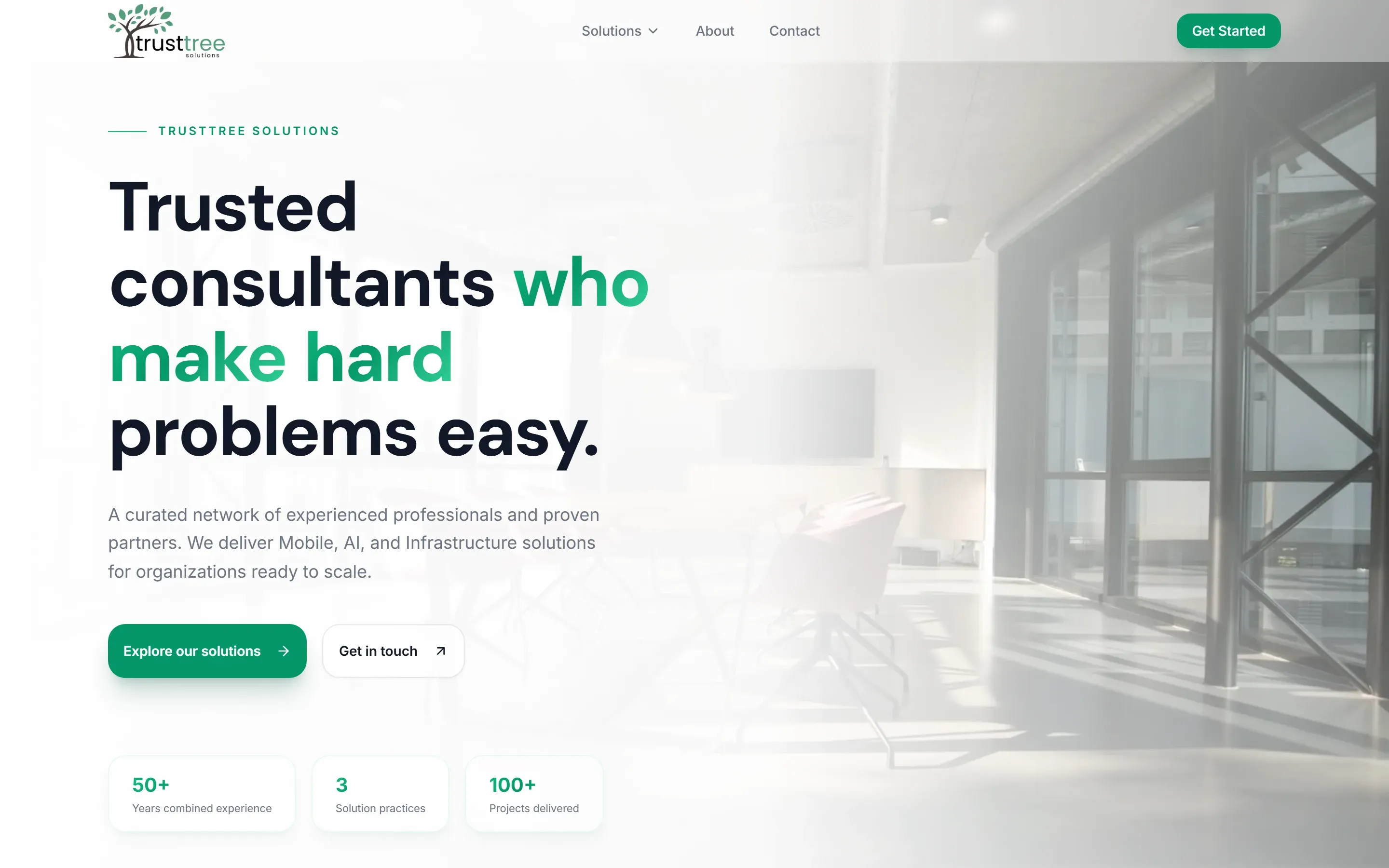
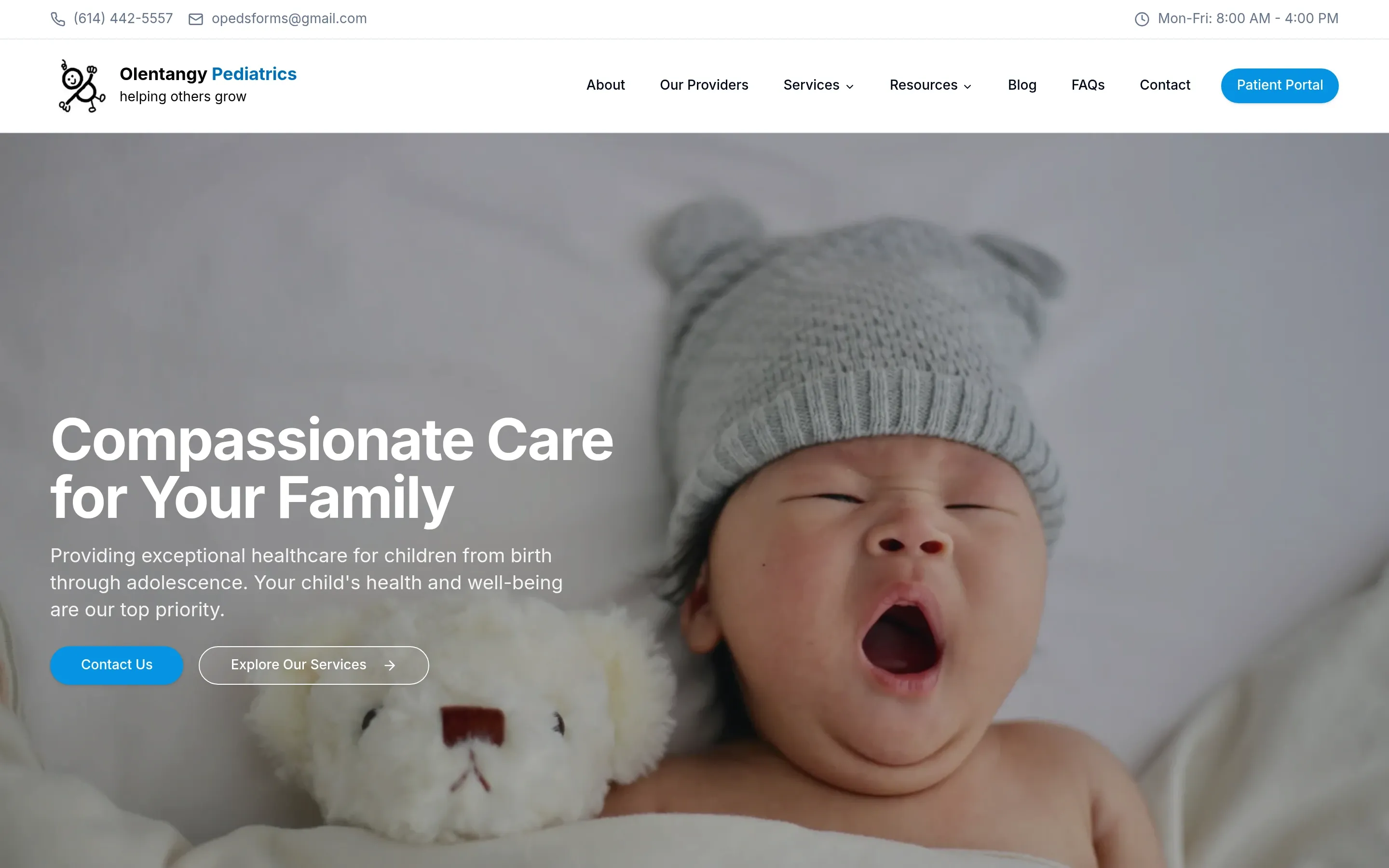
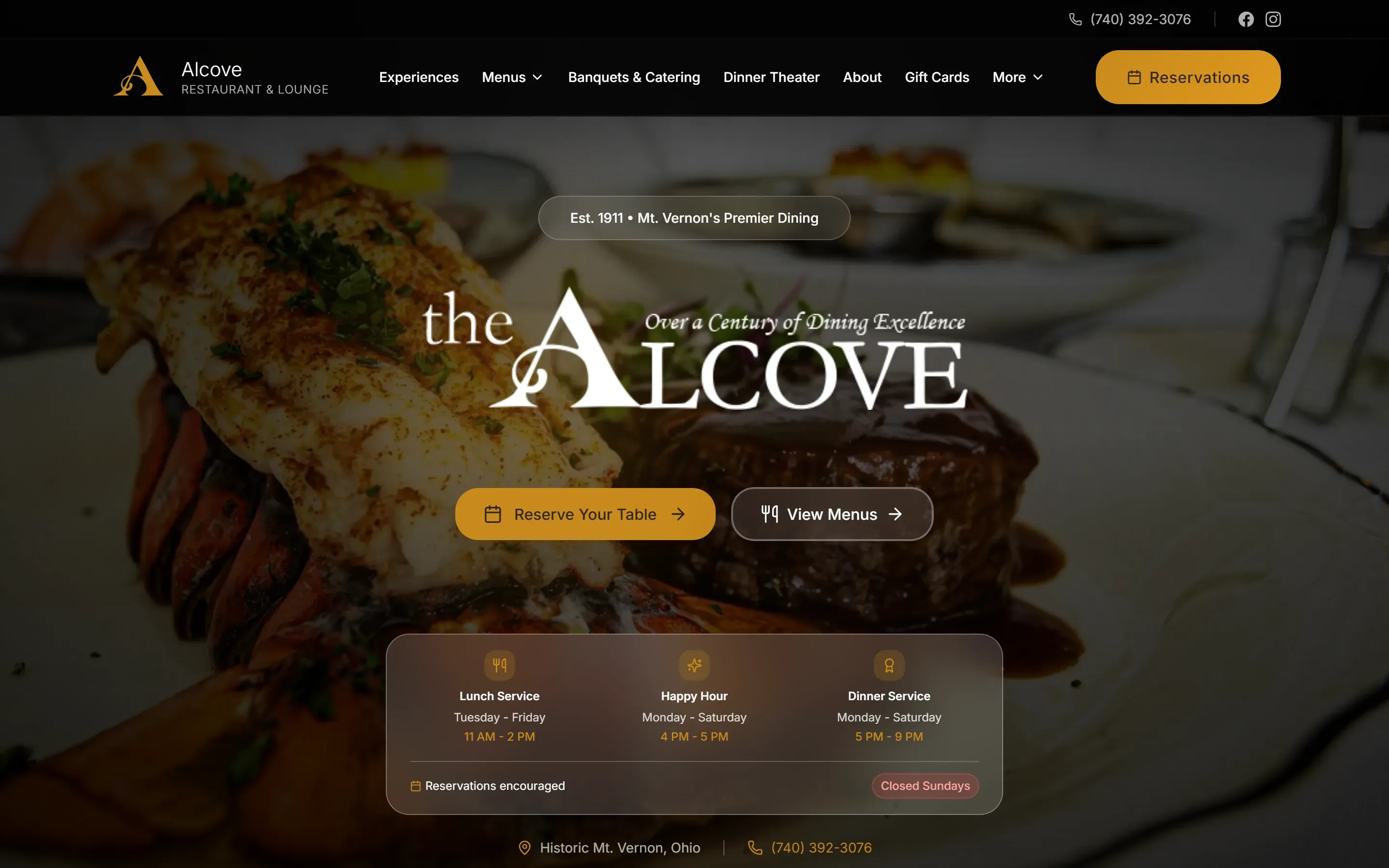
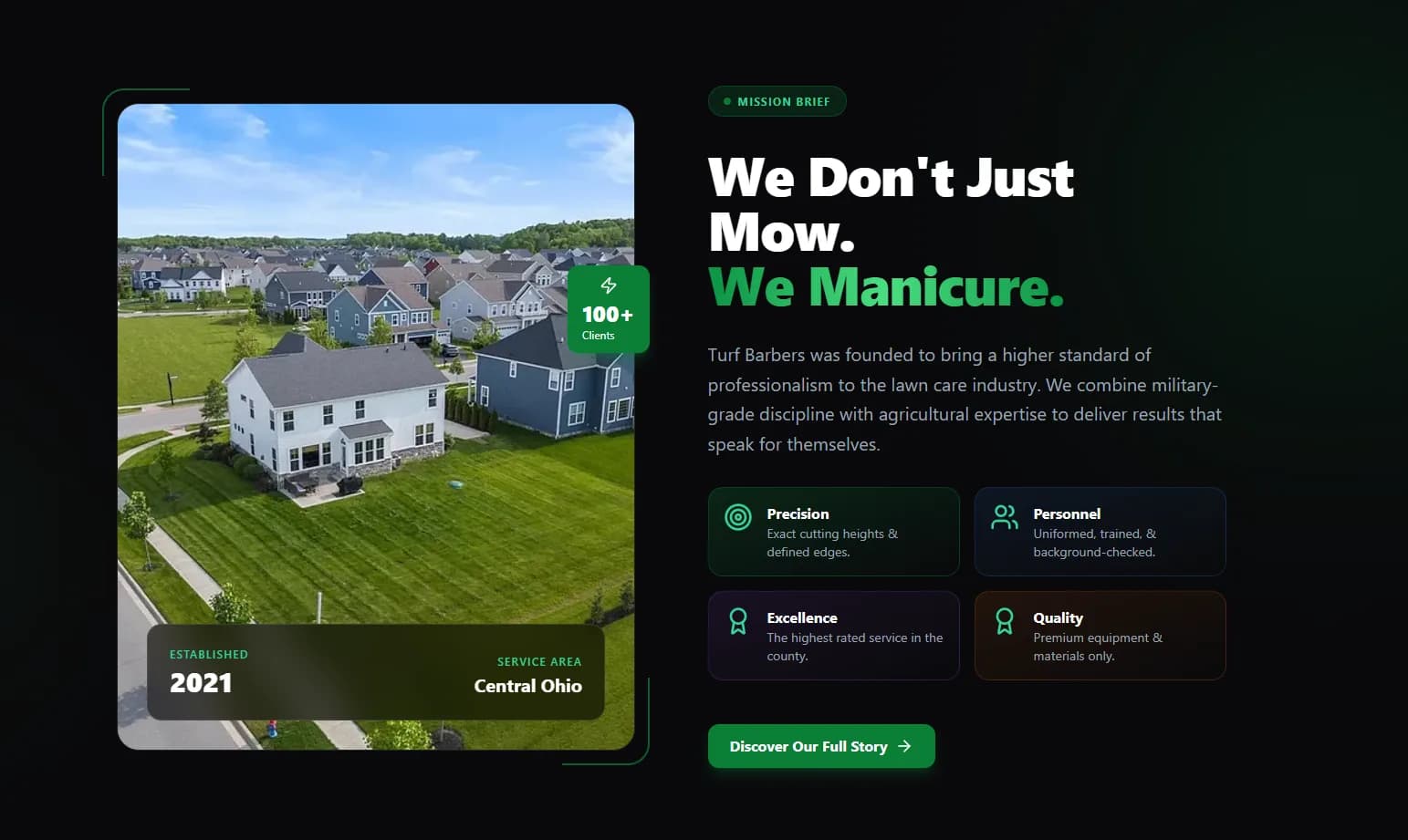
TrustTreeOlentangy PediatricsSapling MobileAlcove RestaurantMattison YoderAtlas CosMuse of PowellSplash LaundryMeyers LandscapeRedi-ViewTrustTreeOlentangy PediatricsSapling MobileAlcove RestaurantMattison YoderAtlas CosMuse of PowellSplash LaundryMeyers LandscapeRedi-View
How a build actually goes

From kick-off to launch, in six weeks.

No abstract wireframe timeline. A real plan, a live preview link, feedback in Pastel, a site that ships on schedule, then Ground Control keeps watch.
Week 1

Kick-off & audit

We start by understanding the business, not the pixels. A working session, a teardown of the current site, and a competitive read, turned into a plan everyone signs off on.

  • Kick-off workshop with your team
  • Audit of the current site & analytics
  • Goals, audience map & success metrics
  • A one-page strategy brief
Weeks 2–3

Design & check-in

As soon as the design takes shape it lands on a private preview link. You watch the build come together in real time, leave notes, and we iterate, no waiting for a big reveal.

  • Private preview link, updated live
  • Weekly check-in calls
  • Real content on real pages
  • Iterate together before polish
Weeks 4–5

Review in Pastel

Final feedback happens async in Pastel. Pin a comment exactly where you mean it, approve in context, and track every change to done, no screenshots in email threads.

  • Pin comments directly on the design
  • Approve or request changes in context
  • Threaded discussion, fully tracked
  • Nothing slips through the cracks
Week 6

Launch

A quiet-Tuesday cutover, redirects mapped, analytics wired. We ship measured, then Ground Control keeps watching the numbers with you.

  • QA across browsers & devices
  • 301 redirects & DNS cutover
  • Analytics + conversion events live
  • Performance-budget verified
Ongoing

Launch when you say GO!

After launch, Ground Control keeps watching the dashboard with you, weekly performance reviews, small wins shipped fast, and a clean handoff when you're ready to take it in-house.

  • Weekly performance review
  • Iteration backlog
  • Team training session
  • Clean handoff docs
our rocket science

The Flight Plan Forward

Transparent design process from first call to launch day.
  1. 01
    Week 1

    Discovery & Planning

    We read everything you'll send us. Talk to your founders, your salespeople, three recent customers. We come back with a one-page brief, what the site needs to do, who it's for, and what will make it succeed. If the brief is wrong, nothing after it will be right.

    • Kickoff workshop (half day)
    • Three stakeholder interviews
    • One-page strategy brief
    • Signed-off success metrics
  2. 02
    Weeks 1–2

    Architecture & wireframes

    Sitemap, page-level wireframes, content outlines. Low-fidelity on purpose. We want to argue about structure while it's cheap to change. By the end of this phase, every page has a purpose and a job to do.

    • Sitemap & user flows
    • Page wireframes
    • Content outline per page
    • SEO keyword map
  3. 03
    Weeks 2–3

    Site Vibe Check

    Art direction first, two or three distinct directions on one or two key pages. We pick a lane together, then design every page and every state. No "we'll figure that out later."

    • Two art-direction concepts
    • Full hi-fi design in Figma
    • Component library
    • Motion principles & hover states
  4. 04
    Weeks 3–5

    Full steam ahead

    Design and build overlap by a couple of weeks, front-end work starts as soon as the system is locked. Weekly demos on a real staging URL. You see progress the same day we make it.

    • Fully-coded pages on staging
    • CMS schema & admin
    • Weekly demo calls
    • Accessibility & performance pass
  5. 05
    Weeks 5–6

    Review & Edit

    Cross-browser, cross-device, real content in the CMS. Analytics + conversion events wired, 301s mapped, DNS cutover scheduled for a quiet Tuesday. We don't launch on Fridays.

    • QA checklist (120+ items)
    • 301 redirect map
    • Analytics dashboard
    • Launch runbook
Step 01Week 1

Discovery & Planning

We read everything you'll send us. Talk to your founders, your salespeople, three recent customers. We come back with a one-page brief, what the site needs to do, who it's for, and what will make it succeed. If the brief is wrong, nothing after it will be right.

  • Kickoff workshop (half day)
  • Three stakeholder interviews
  • One-page strategy brief
  • Signed-off success metrics
Field notes

Field notes on buying a website.

The questions every founder asks us in the first call, answered in writing, so you can compare us honestly.

What a website should cost in Columbus

Most Columbus small businesses pay somewhere between $5,000 and $50,000 for a professionally built website, and the spread is not arbitrary. On the low end you're buying a template with your logo and copy poured in. In the middle you get custom design on a proven platform. At the top you get research, custom design, custom engineering, and a team that stays accountable to a number after launch.

Our projects start at $24,000 because we don't sell the first two tiers. That's not a judgment, a $5k template site is genuinely the right call for some businesses, but it is a different product. When a site has to carry real revenue, the research and engineering are what make it perform, and those don't compress.

The honest question
Ask any agency what happens if the new site doesn't improve your numbers. If the answer is a shrug, you're buying pixels, not outcomes.
02Why we build on Next.js instead of WordPress

Most Columbus agencies build on WordPress because it's what they know, then paper over the speed problems with caching plugins. We build most sites on Next.js, the same framework behind some of the fastest sites on the web, because it produces pages that are quick by architecture, not by patch.

  • Speed: server-rendered pages with optimized images pass Core Web Vitals without plugins, and speed is a ranking factor.
  • Security: no plugin ecosystem means no plugin vulnerabilities, the most common way WordPress sites get compromised.
  • Ownership: your site is code in a repository you own, not a tangle of licensed plugins that break on update.

For content-led marketing sites where the team wants visual editing, we also ship on Webflow and Framer, the right platform is the one that fits how your team will actually run the site.

03Four to six weeks, week by week

A typical build runs four to six weeks. Week one is research and messaging, interviews, analytics review, sitemap. Weeks two and three are design, starting with the pages that carry revenue. Weeks four and five are engineering and content load-in. The final week is QA, analytics wiring, and launch. You see work every week and sign off at defined milestones, so nothing surprises you at the end.

The fixed-fee, milestone-based contract (33% at kickoff, 33% at design sign-off, 34% at launch) means our incentive is to finish well, not to bill hours.

04Custom design vs. templates, when each wins

Templates win when speed-to-live and budget dominate: a brand-new business that needs a credible web presence this month should not spend $30k on custom design. Custom wins when differentiation pays: if your customers compare you against three competitors in open tabs, looking like the same theme as everyone else has a real cost.

The trap is the middle, paying custom prices for template work. If an agency can't show you the research that drove a design decision, you're looking at a template with a markup.

05How to choose a web design agency (a checklist that includes not choosing us)
  • Visit their portfolio sites, not the screenshots, the live sites. Are they fast on your phone right now?
  • Ask who does the work. If sales, design, and dev are different people you'll never meet, expect handoff loss.
  • Ask what happens after launch. A site nobody maintains decays in months.
  • Ask how success is measured. Rankings, leads, conversion, if there's no number, it's decoration.

And honestly: if you need enterprise e-commerce, a $3k budget stretched thin, or a vendor who says yes to everything, we're the wrong shop. We'll tell you that on the first call. If you need a site that has to win compare-shopping against real competitors, that's the work this studio was built around.

Frequently asked.

Everything teams ask before kicking off a Web Design engagement.

Still have a question?

Email a partner directly, no SDRs, no chatbots, no marketing list. Just a straight answer from someone who does the work.

  • First reply within one business day
  • A partner answers, never an SDR
  • Happy to sign an NDA before we talk
How long does a typical project take?
We turn most sites around in four to six weeks from kickoff to launch. Bigger or more complex builds can extend from there. We'll give you a week-by-week timeline in the proposal, and we almost never miss it.
What stack do you build on?
Most often: Next.js + Sanity, deployed on Vercel. We also ship a lot on Webflow and Framer for content-led sites, and we can work in your existing stack if you have a good reason to stay there.
Can you work with our existing brand?
Yes, if you have a real system (not just a logo), we can lean on it heavily. If it's half-built, we'll extend it. If it's broken, we'll tell you honestly and scope the brand work as a separate phase.
Do you offer ongoing support after launch?
30 days of support is included in Starter, 90 in Core, and up to 12 months of retainer is available for Custom engagements. After that, we can hand off to your team or keep a quarterly cadence.
What does the contract look like?
Fixed-fee, milestone-based. 33% at kickoff, 33% at design sign-off, 34% at launch. No hourly billing, no change-order gymnastics, if scope moves, we talk.
Who actually does the work?
The same three to five people from kickoff to launch. No juniors-on-weekends, no offshore handoffs. You'll know everyone by name and slack them directly.
Will the team be able to update the site themselves?
Yes. That's the point. Marketing ships pages without a ticket. We build the CMS around your team's actual workflow and run a training session before launch.
Ground control to Houston:

Let's build
something out of
this world.

[email protected]