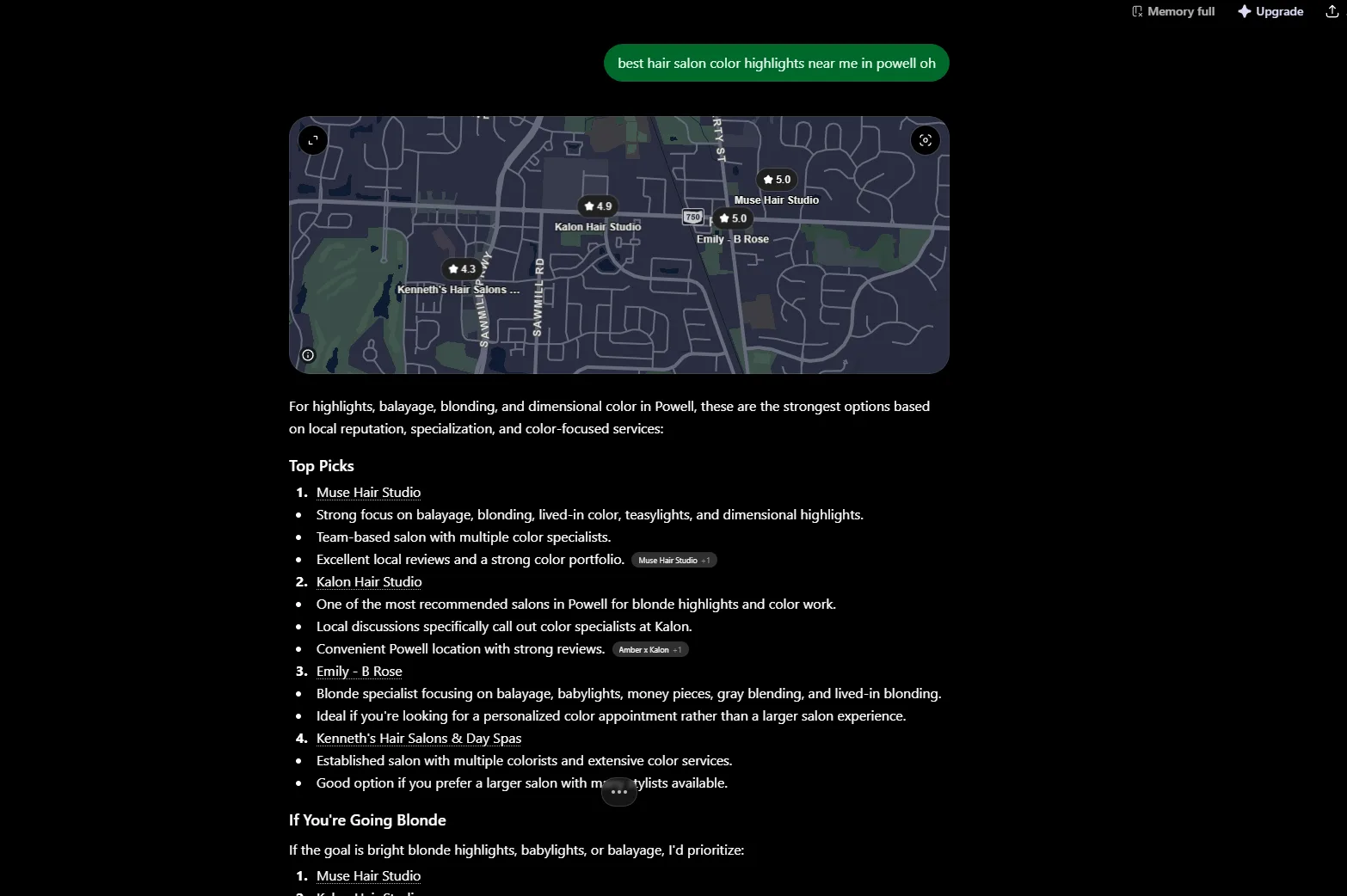
Search did not disappear in 2026. It got another front door. Your customers still use Google, but they are also asking ChatGPT, Gemini, Perplexity, Copilot, and AI Overviews to shortlist vendors before they ever land on a website. That means visibility is no longer just about ranking. It is about being clear, trusted, and specific enough for an answer engine to cite.
For most service businesses, this is not a reason to panic or throw away the SEO work that already compounds. It is a reason to tighten the fundamentals. The same pages, reviews, schema, case studies, and local proof that help people trust you also help AI systems understand when you are the right answer.
Why this matters now
The June 2026 signal is hard to ignore: B2B marketers are moving generative engine optimization from experiment to operating discipline. Recent industry research from GNW Consulting and Demand Metric reported that 92% of organizations are experimenting with or operationalizing GEO, while 78% of those investing report measurable ROI. The gap is not awareness anymore. The gap is ownership.
That matters for local and regional businesses because AI answers tend to compress the consideration set. A customer asking 'who should I hire for commercial landscaping near Columbus?' may see three names, a summary, and a recommendation. If your brand is not represented clearly across your site and the sources AI systems trust, you may never make the shortlist.
The new question is not just 'Do we rank?' It is 'Are we easy for a machine to confidently recommend?'
What AI search is actually looking for
Answer engines are not magic referral engines. They assemble responses from signals they can find, compare, and verify. A vague service page with thin claims gives them very little to work with. A specific page with clear services, locations, proof, schema, FAQs, reviews, and named expertise gives them something safer to summarize.
- A clear business entity: consistent name, address, phone, service categories, and social profiles
- Extractable answers: short sections that plainly answer the questions buyers ask
- Proof: case studies, reviews, testimonials, awards, portfolio examples, and original data
- Structured context: Organization, LocalBusiness, Service, FAQ, Article, and review markup where appropriate
- Cross-channel confirmation: consistent descriptions on Google Business Profile, LinkedIn, directories, YouTube, and industry sites
Start with a prompt panel
Before rewriting content, build a small prompt panel: 20 to 40 questions a real buyer might ask an AI assistant. Include local, service-specific, comparison, and problem-aware prompts. Then run them across the tools your audience is likely to use and record which brands appear, what sources are cited, and what language the answer uses.
- Who are the best providers for this service in our market?
- What should I look for before hiring this kind of company?
- How much does this service cost and what affects price?
- Which company is best for my situation, timeline, or industry?
- What questions should I ask before signing a proposal?
This gives you a practical baseline. You will see where your business is invisible, where a competitor owns the answer, and where your website lacks the evidence needed to support the recommendation you want.
Turn your website into a better source
The fastest wins usually come from making existing pages more useful. Add answer-first sections to service pages. Replace generic claims with specifics. Show who the service is for, what problems it solves, what the process looks like, what decisions affect cost, and how a buyer should evaluate providers. AI systems prefer passages that resolve a question cleanly.
A strong service page in 2026 should read like a source a careful human would trust. It should include real examples, clear geographic relevance, visible authorship or company expertise, and internal links to related case studies. If the page could belong to any competitor after swapping the logo, it is not differentiated enough for people or AI.
Do not flood the site with AI content
The wrong reaction is to publish dozens of generic AI-written posts because AI search feels like a content arms race. That creates more pages for crawlers to ignore and more low-quality claims for customers to distrust. The better move is fewer, stronger pages that answer real questions with real expertise.
If you use AI in the writing workflow, use it like a production assistant, not a strategist. Let it help outline, summarize interviews, or spot missing questions. Keep the actual point of view grounded in your team, your customers, your projects, and your market.
A 30-day AI search readiness plan
- Week 1: Build your prompt panel and document where your brand, competitors, and sources appear.
- Week 2: Audit your top service pages for clarity, specificity, schema, internal links, and conversion paths.
- Week 3: Upgrade one priority page with answer-first sections, FAQs, proof, and stronger local or industry context.
- Week 4: Refresh your off-site entity signals, including Google Business Profile, LinkedIn, directory listings, review profiles, and portfolio references.
Repeat that loop monthly. The goal is not to chase every AI platform change. The goal is to steadily become the clearest, most credible source for the questions that create pipeline.
What clients should expect
AI search visibility compounds. You may see early movement when a page becomes easier to crawl and quote, but durable citation share usually follows consistent content, technical cleanup, reviews, and third-party validation over time. Treat it like SEO with a new reporting layer: citations, sentiment, share of answer, assisted leads, and the quality of traffic that arrives from AI-referred sessions.
The businesses that win this shift will not be the ones with the loudest AI announcements. They will be the ones with the clearest service pages, strongest proof, cleanest data, and most consistent brand presence. In a market where answer engines are narrowing the shortlist before customers click, being easy to trust is the strategy.