TrustTree: cutting a 7-step sign-up flow to 2
A SaaS marketing site with a 4.1s LCP and a funnel bleeding 41% of users, rebuilt into a single Next.js codebase with a two-screen sign-up.
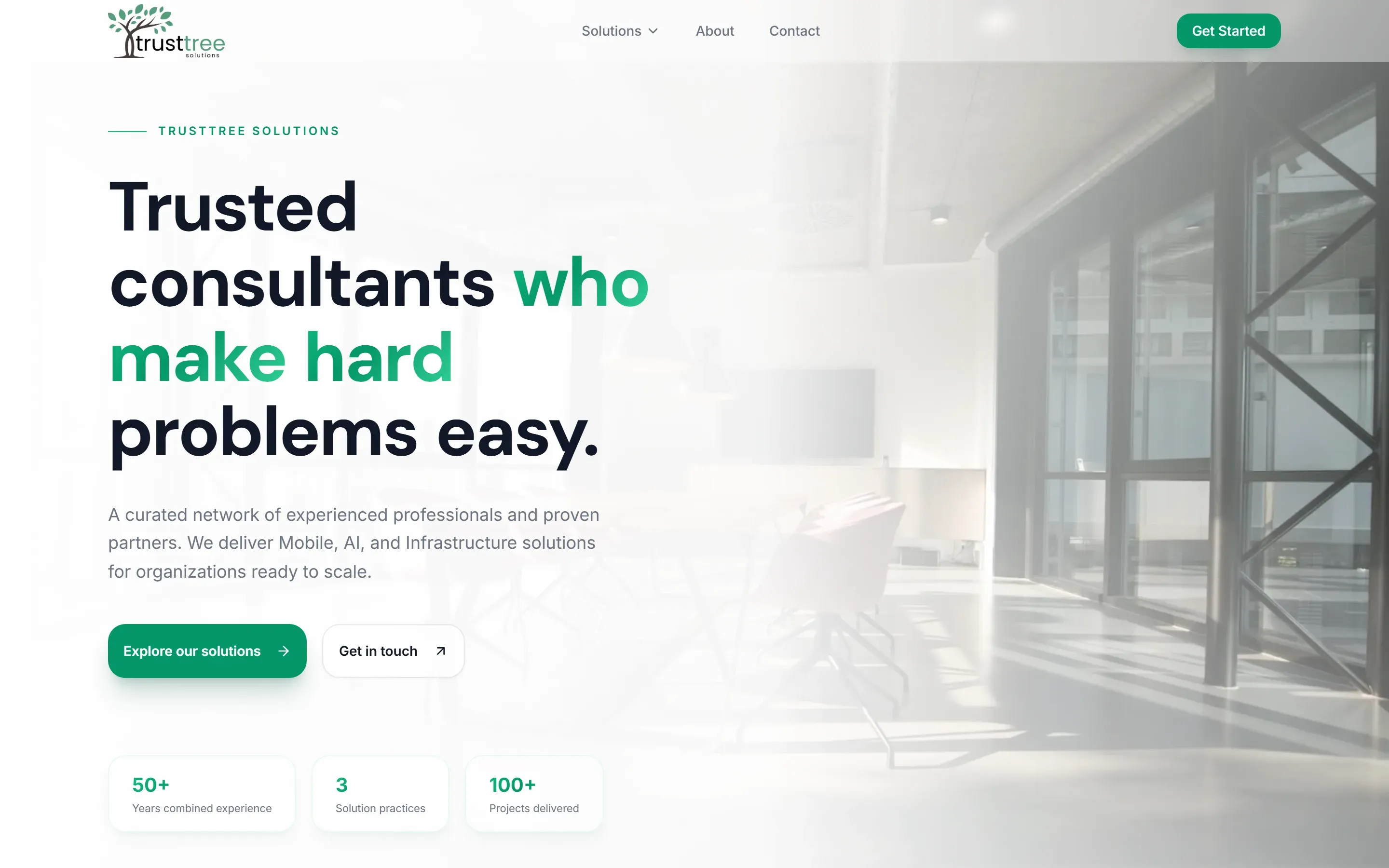
TrustTree came to us with a problem that looked like a design problem and turned out to be an architecture problem. Their marketing site ran on WordPress, bolted to a Node application through a patchwork of redirects. Largest Contentful Paint sat at 4.1 seconds on mobile, and the sign-up flow walked users through seven screens, analytics showed 41% of prospects abandoning between steps three and five.
The diagnosis
The seven-step flow existed because the two systems couldn't share state, every handoff between the WordPress site and the app forced a new screen. No amount of visual polish fixes that; the funnel was long because the architecture made it long. We scoped a rebuild, not a redesign: one Next.js codebase serving both the marketing pages and the sign-up flow.
The build
Six weeks, milestone by milestone. Week one was research, session recordings, funnel analytics, and interviews with five recent sign-ups. Weeks two and three were design, starting from the sign-up flow outward (the revenue path gets designed first, the About page last). Weeks four and five were engineering: the two-screen funnel, server-rendered marketing pages, and a CMS the marketing team could ship from without developer help. Week six was QA and a zero-downtime cutover.
What happened
Ninety days after launch: qualified sign-ups up 218%, LCP at 0.8 seconds on 75th-percentile mobile, and the marketing team shipping landing pages weekly without touching a ticket queue. The stack is the one we default to for exactly this reason, speed you don't have to maintain with plugins.
“The smartest creative partner we've ever had. Every deliverable ships on time.”